
Invoering
Five years after the COVID-19 pandemic, the job market has not returned to normal, it has permanently transformed.
What began as an emergency shift to remote work has evolved into a new global work model, where remote, hybrid, and office-based work now coexist.
👉 The real question is no longer “Should we go back to the office?”
👉 It is “How should work be structured today?”
This article provides a data-driven analysis of the job market in 2026, backed by trusted sources like Gallup and McKinsey.
1. Remote Work Is Now a Structural Reality
Remote work did not disappear after the pandemic, it became a foundation of the modern job market.
Volgens Gallup, a significant share of employees continue to work remotely, either fully or part-time.
👉 Over 90% of remote-capable employees prefer hybrid or fully remote work.
Before COVID, remote work was marginal. Today, it is a baseline expectation.
➡️ This shift has:
- Expanded talent pools
- Increased job competition
- Redefined what “attractive jobs” look like
2. Hybrid Work Has Become the Dominant Model
Hybrid work is now the most common structure across industries.
👉 Around 50–52% of employees work in hybrid models, while ~30% are fully remote
Additionally:
- Employees typically spend ~2–3 days per week in the office
👉 However, hybrid work is still evolving:
- Some companies enforce rigid schedules
- Others offer full flexibility
- Many create unclear expectations
➡️ Result: a fragmented job market
3. Employee Expectations Have Fundamentally Changed
The biggest disruption is not remote work itself—it is what employees now expect from work.
👉 Around 60% of employees prefer hybrid work, while a large portion favor fully remote roles
👉 Another key insight:
- A significant share of employees would consider leaving if flexibility is removed
➡️ Flexibility is no longer a perk, it is a decision-making factor.
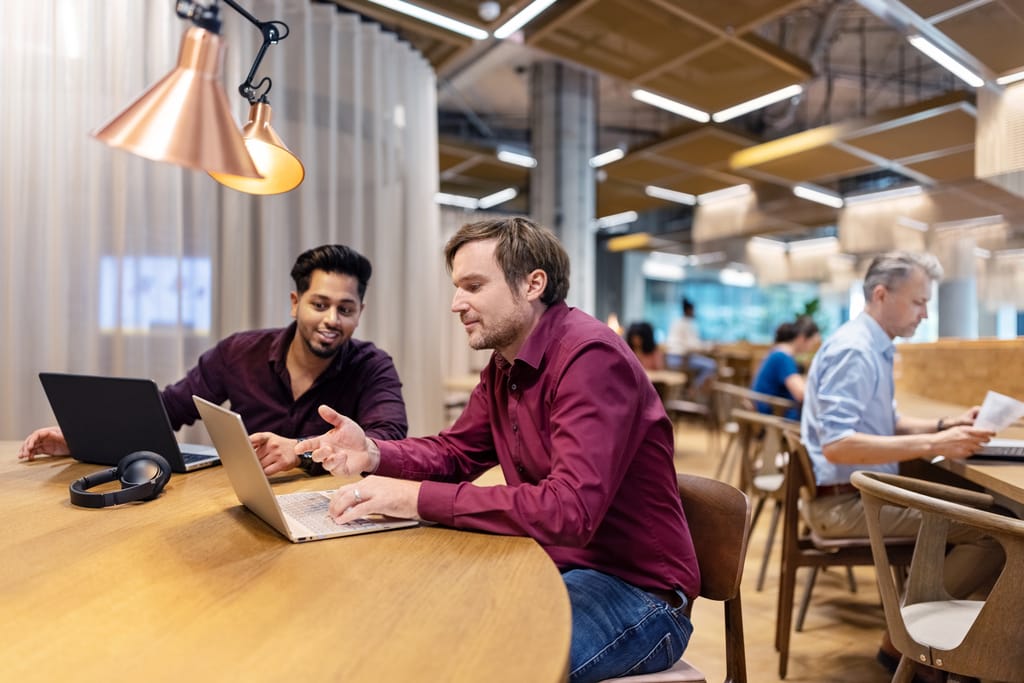
4. Return-to-Office Policies Are Misaligned with Reality
Between 2023 and 2025, many companies attempted to enforce return-to-office (RTO) policies.
However, data shows a clear disconnect.
👉 Office attendance remains below pre-pandemic levels
McKinsey & Company research
👉 Employees continue to prioritize flexibility over presence
➡️ This creates:
- Increased attrition
- Lower engagement
- Employer branding challenges
👉 The office is no longer a default
👉 It must provide clear value (collaboration, culture, connection)
5. The Job Market Is Now Global
Afstandswerk has removed geographic barriers.
Companies now:
- Hire internationally
- Access broader talent pools
- Compete globally for top talent
👉 This trend is highlighted across global workforce studies from McKinsey & Company en International Labour Organization
➡️ The job market is no longer local, it is borderless
6. Productivity and Performance: What the Data Shows
One of the biggest concerns about remote work was productivity.
Research now provides clarity.
👉 Studies from Stanford University show:
- No negative impact on productivity
- In many cases, productivity improves in flexible work environments
👉 Additional insights from Gallup show:
- Higher engagement among remote workers
- Strong performance in hybrid teams
➡️ The challenge is not productivity
➡️ It is coordination and management
7. Managing the New Complexity of Work
Flexibility creates operational complexity.
Companies must now manage:
- Who works where and when
- Office space usage
- Team coordination
- Employee visibility
👉 This is where solutions like FLYDESK become essential.
FLYDESK helps companies:
- Plan hybrid schedules
- Book desks and resources
- Visualize team presence
- Optimize workplace usage
➡️ Without structure, flexibility leads to inefficiency
➡️ With the right tools, it becomes a competitive advantage

8. The Real State of the Job Market in 2026
The job market today is defined by three major shifts:
1. Flexibility is expected
Remote and hybride werk are standard
2. Talent is global
Hiring is no longer limited by geography
3. Work is outcome-driven
Performance matters more than presence
Conclusion
Five years after COVID, the job market has not returned to its previous state, it has evolved into a new system.
👉 Remote work redefined expectations
👉 Hybrid work reshaped operations
👉 Global hiring increased competition
The companies that succeed in 2026 will:
- Align with employee expectations
- Embrace flexibility
- Invest in the right tools
With FLYDESK, companies can structure remote and hybrid work effectively while optimizing their workplace.
👉 Boek een demo today and build a flexible, efficient, and future-ready workplace.
Over FLYDESK
FLYDESK is innovatieve software voor hybride werkbeheer die bedrijven helpt de productiviteit te verbeteren, het gebruik van de werkruimte te optimaliseren en de samenwerking binnen teams te versterken. FLYDESK is ontworpen voor bedrijven die flexibele werkmodellen omarmen en stroomlijnt de coördinatie tussen thuiswerken en kantoorwerk, waardoor het beheer van teams en resources eenvoudiger wordt. Ontdek hoe FLYDESK uw hybride werkplek kan transformeren en de operationele efficiëntie kan verhogen. Neem contact op Kom vandaag nog meer te weten!
