Key takeaways
- Ask for evidence for the exact model and configuration.
- Separate material labels from whole-product environmental performance.
- Include repair, relocation and end-of-use arrangements in the purchase.
Turn an environmental claim into a buying question
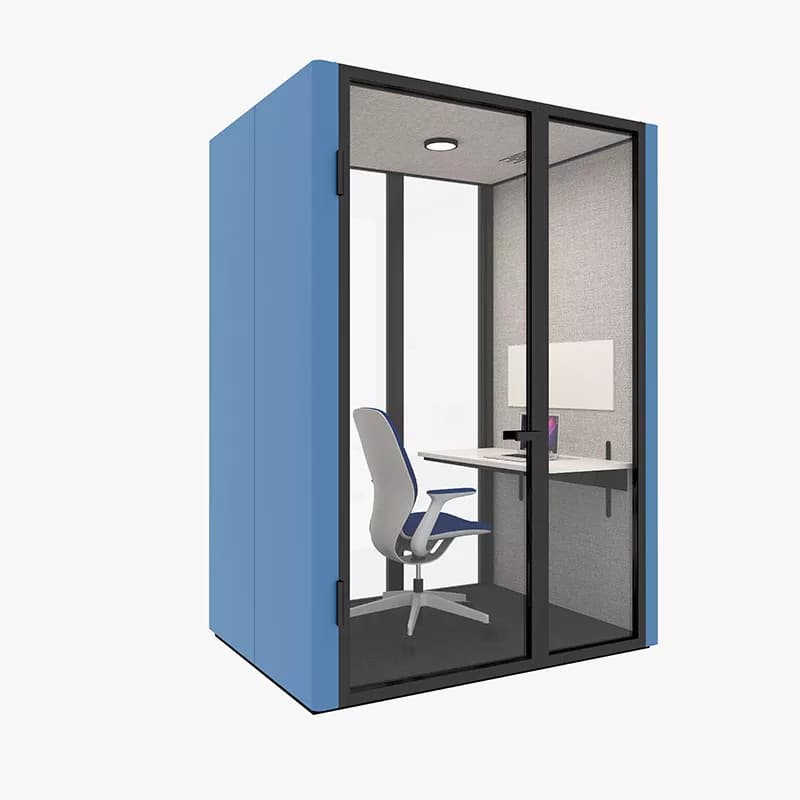
A pod's appearance tells you little about its environmental impact. A wood finish, recycled lining or occupancy sensor can be worth examining, but none answers the whole purchasing question. Start with the space you need, then ask for evidence about the exact configuration you would order.
This guide separates product documentation from practical purchasing questions. Sources were checked on 27 September 2026. FLYDESK sells office pods; ask for the supporting documents available for your quotation rather than assuming every product carries the same environmental credentials.
Ask for evidence covering the whole product
An Environmental Product Declaration, or EPD, reports verified life-cycle environmental information. EPD International explicitly notes that having one does not establish environmental superiority. Use it to understand a product, not as an automatic green approval.
For a comparison, ask your supplier to explain the declared unit, life-cycle stages, service-life assumptions and configuration covered. If those differ, two headline carbon figures may not answer the same question. Record missing information instead of filling the gaps with a favourable estimate.
Framery provides separate EPD links for several named pods on its sustainability page. That is a useful example of model-specific documentation; it is not evidence about another manufacturer's booth or a different configuration.
Check what material labels actually cover
FSC distinguishes three labels for forest-based materials: FSC 100%, FSC Recycled and FSC Mix. Mix can include certified, recycled and controlled material. It should not be read as a claim that the entire booth is made from recycled materials.
Ask which component a claim covers and request the applicable documentation. For recycled content, establish the material, percentage and calculation basis. Treat material origin, chemical emissions, acoustic performance and total environmental impact as separate questions. A certificate addressing one does not answer all four.
Make repair and reuse part of the quotation
Before ordering, ask how the pod can be serviced and moved. Can a damaged seal, fan, light or panel be replaced separately? Who supplies the parts, what is covered by the warranty and what does a relocation involve? Get the answers in writing for the model and destination concerned.
This is a purchasing checklist, not a claim that every modular booth can be moved indefinitely. Include dismantling, transport, reassembly and any replacement parts in a future relocation scenario. Compare retaining or adapting existing space as well as buying new equipment.
- Keep the model reference, manual and maintenance contact together.
- Ask for spare-part availability and service conditions.
- Clarify who can dismantle and reinstall the booth.
- Request local take-back or disposal arrangements without assuming that they exist.
Examine electricity use in the intended setting
Ask for power consumption in use and in standby, and how lighting and ventilation are controlled. Check what the figures include. An occupancy sensor alone does not tell you the annual electricity demand, and a product photograph does not confirm the supplied controls.
Discuss expected hours of use with the facilities team. Keep any estimate's assumptions visible and separate the pod's electricity from the building's heating, cooling and ventilation. Do not credit a booth with whole-office energy savings unless the proposed change has actually been assessed.
Request a documented proposal
Create a short comparison sheet for shortlisted models: intended task, capacity, environmental documents, repair options, power information and end-of-use arrangements. Flag unanswered items before comparing the installed cost. The lowest purchase price and the strongest environmental evidence are different criteria that you can evaluate together.
For a FLYDESK enquiry, send your location, intended use and expected changes to the office. Request the selected configuration and its available documents. Choose a pod that meets a demonstrated need and that your team can maintain; avoid buying additional equipment merely because its description sounds sustainable.