
This article was first published in 2019 to introduce a FLYDESK diagnosis service. It now separates practical evaluation steps from that historical proposal. The archive does not establish that the free report or its surveys are still available; contact FLYDESK to confirm current support.
Start with the work and the people
List tasks that require presence, service hours, equipment, coordination and access needs. Ask employees and managers where current arrangements help or hinder their work. Record the starting situation and choose observable outcomes, such as completed handovers, booking problems and team feedback. Scheduling or activity counts alone do not measure individual productivity.
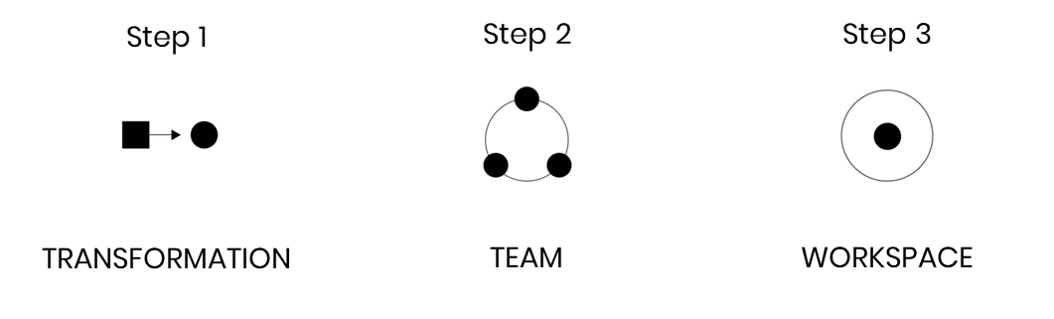
Understand the historical Flex Models
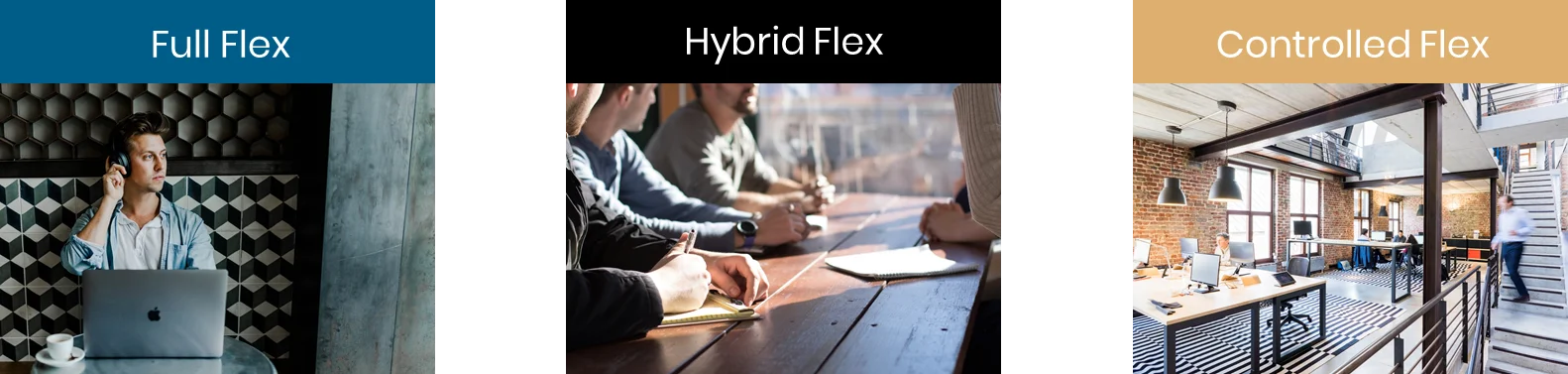
The 2019 proposal used three separate dimensions: location, working time and equipment. Its models were examples for discussion, not universal standards or current product capabilities.
- Controlled Flex: 1 day from anywhere per week, 1 hour of flexibility in working time, or occasional use of a personal device.
- Hybrid Flex: 2–3 days from anywhere per week, 2–3 hours of flexibility, or a bring-your-own-device policy.
- Full Flex: freedom to choose when and how to work, with responsibility for results.
Run a bounded trial
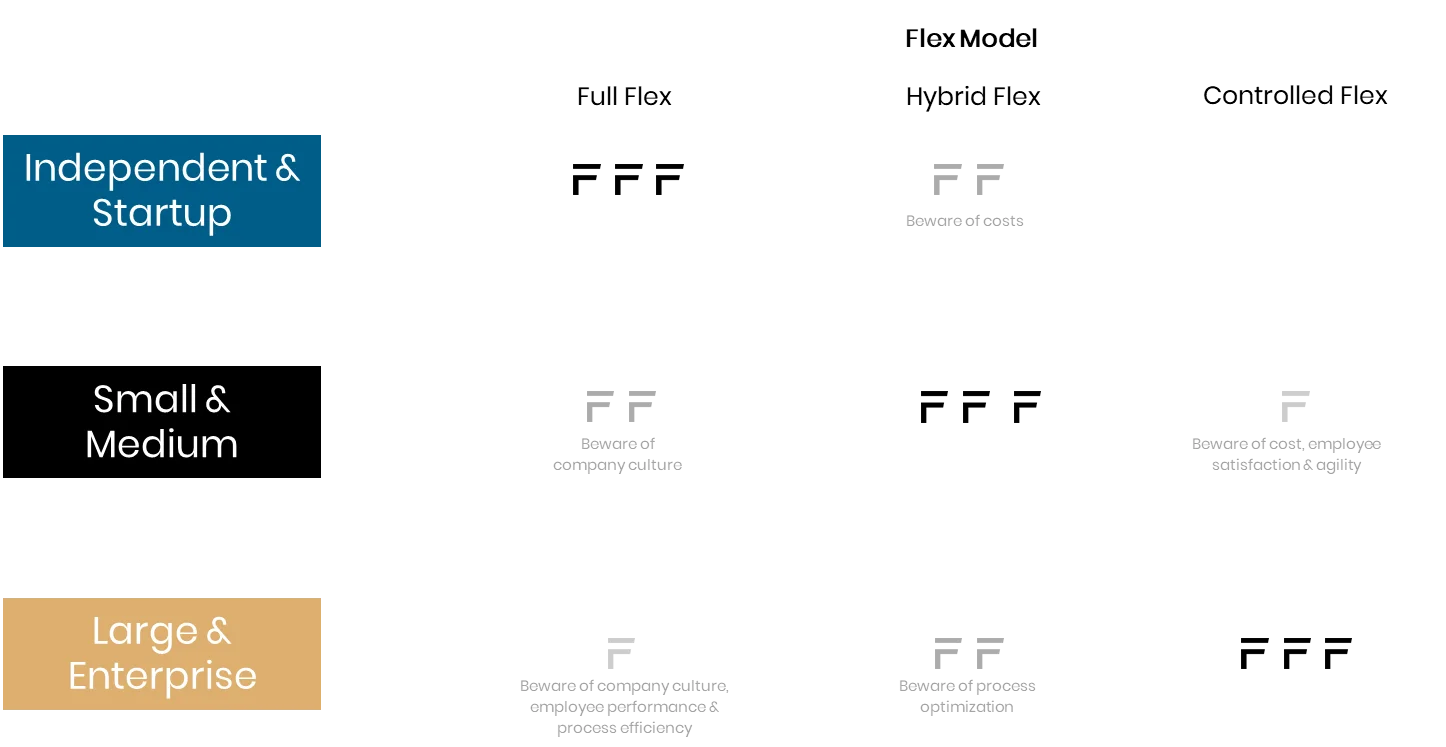
The original recommendation that one main structure suit at least 80% of employees was a proposed rule of thumb, not a validated benchmark. Discuss exceptions by role and operational need. Select a team, define a review date and agree how decisions will be recorded. Check whether the arrangement works for the tasks, coordination, equipment and people involved before extending it. Company size alone does not determine the right model.
Read the sample figures as an archive
The preserved sample reports office costs −25%, retention-related costs −18%, equipment costs −12%, and productivity +3.8%, presented as 18 minutes per day and 1.3 full-time equivalents. It shows USD 159,000 in annual savings. Its values for location (33.72%), time (58.33%) and equipment (33.65%) are separate dimensions, not shares of one total. These outputs are historical illustrations; their assumptions and conversions have not been revalidated. Do not use them as a forecast for your business.
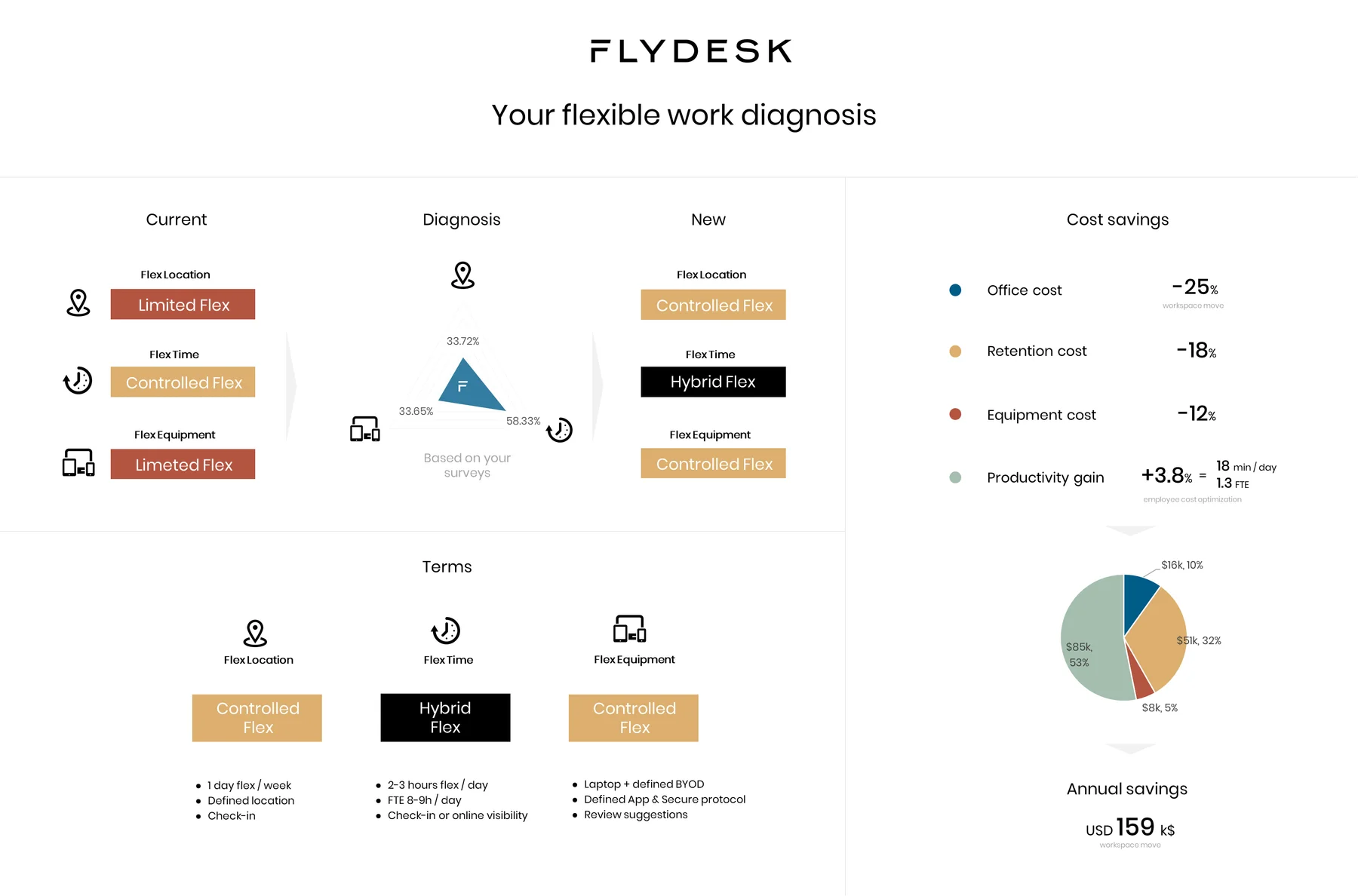
For a new estimate, use your own documented costs, baseline and observation period. Separate cash savings from time estimates; avoid counting the same benefit twice. Include equipment, support, training and transition costs. Discuss results alongside employee feedback rather than attributing every change to flexible work.
Turn observations into a policy
Write down the agreed locations and hours, coordination arrangements, equipment responsibilities, exception process and review date. Explain the policy to the team and revise it using the trial results. The old automatic diagnosis and policy-generator offers are not confirmed here.